From Concept to Production. Built for Brands.

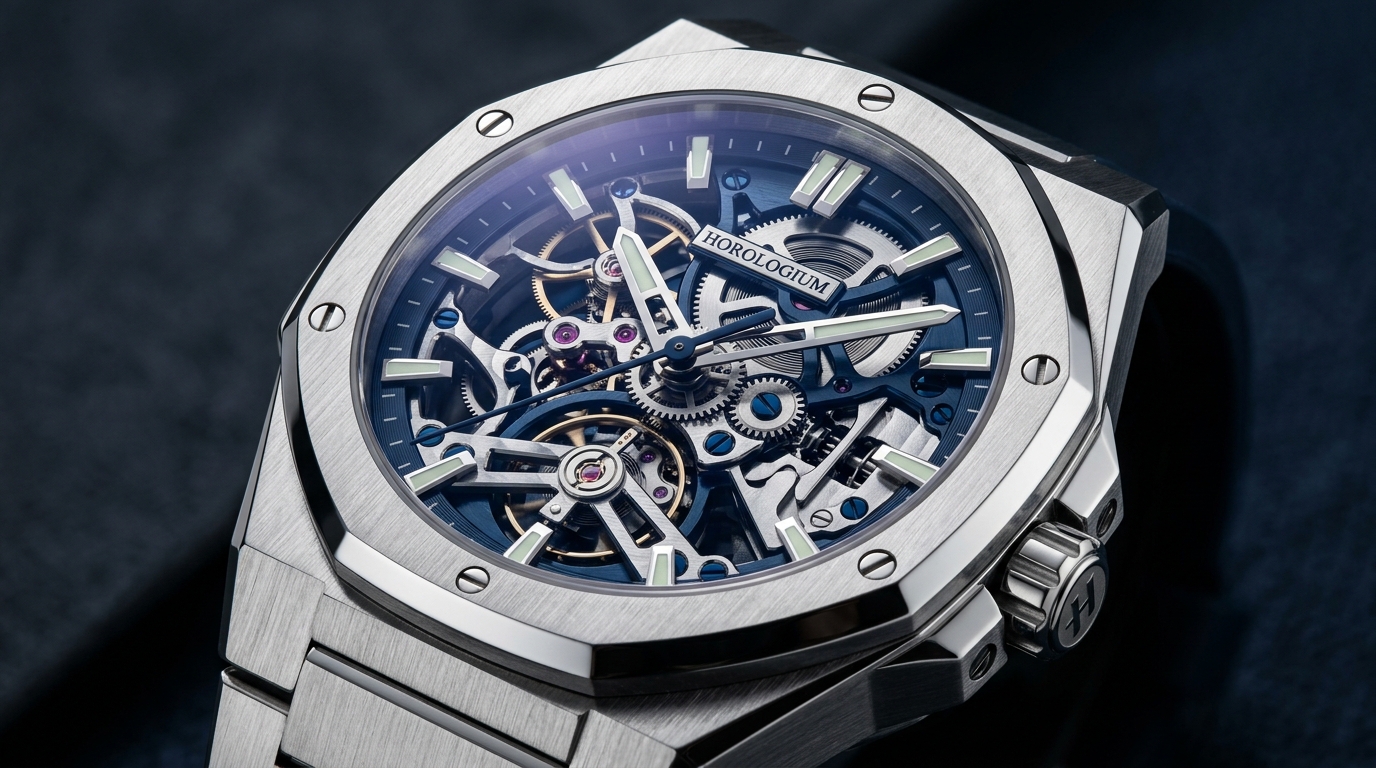
Launching an independent watch brand is one of the most rewarding ventures in consumer product design, but it is capital-intensive and unforgiving of budget miscalculations. Whether your objective is an automotive chronograph, a minimalist dress piece, or a 300-meter diver, understanding the exact financial commitment required before cutting metal is critical to commercial survival.
1. The Direct Answer: Typical Startup Budget Tiers
The total capital required to launch a viable microbrand with an initial production batch of 300 to 500 units standardly ranges from $25,000 to over $120,000 . Your exact financial commitment is dictated primarily by movement specification, case metallurgy, custom tooling complexity, and launch strategy.
Tier 1: Mecha-Quartz / Hybrid
$18,000 to $35,000
Tier 2: Workhorse Mechanical
$38,000 to $75,000
Tier 3: Swiss Mechanical / Titanium
$85,000 to $180,000+
2. Stage-by-Stage Expenditure Breakdown
Phase 1: Industrial Design, CAD Modeling & DFM Review ($3,000 to $9,500)
Every production run begins with converting concept sketches into parametric CAD geometry (.STEP or .IGES files) with complete tolerance stack-up analysis.
- Parametric 3D CAD Modeling ($1,500 to $4,000): Professional horological engineers account for critical tolerances: crystal seat compression, gasket groove depth, dial thickness, and pinion clearance.
- Design for Manufacturability (DFM) Audit ($0 to $1,000): Identifying steep undercut angles, excessive milling steps, or weak lug junctures before cutting metal. Competent OEM manufacturers include this in primary engineering consultations.
- Physical Functional Prototypes ($1,500 to $4,500): A prototype run of 1 to 3 fully functional, pressure-tested sample watches allows you to evaluate wrist ergonomics, bezel detent tactile response, dial color refraction, and lume application under real-world conditions.
Phase 2: Custom Tooling, Stamping Dies & Mold Charges ($2,500 to $8,000)
If your watch utilizes bespoke external architecture rather than open-catalogue blanks, you must fund the non-recurring engineering (NRE) tooling upfront:
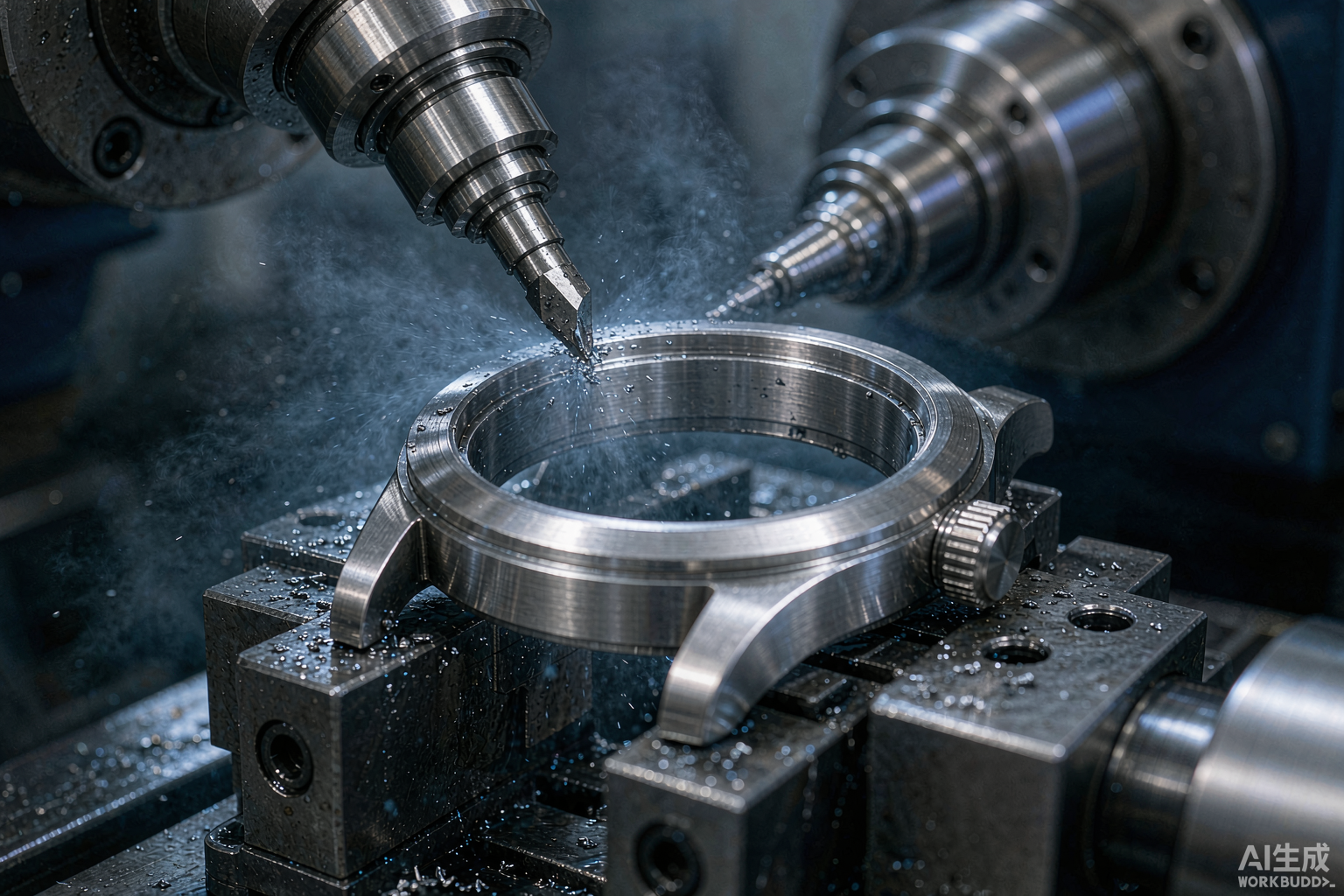
- CNC Fixturing & Case Tooling ($1,500 to $3,500): Dedicated multi-axis jigs, custom bezel ratcheting springs, and caseback threading dies.
- Dial Stamping Plates & Pad Clichés ($600 to $1,500): Applied index casting molds, sandwich dial stamping dies, and multi-color pad printing plates.
- Custom Hand Stamping Tools ($400 to $1,200): Bespoke hour, minute, and counter-weighted second hand stamping dies.
- Solid Steel Bracelet Tooling ($1,200 to $3,000): Custom solid end-links and micro-adjust clasp molds. Opting for high-grade FKM rubber or Italian leather straps eliminates this charge entirely.
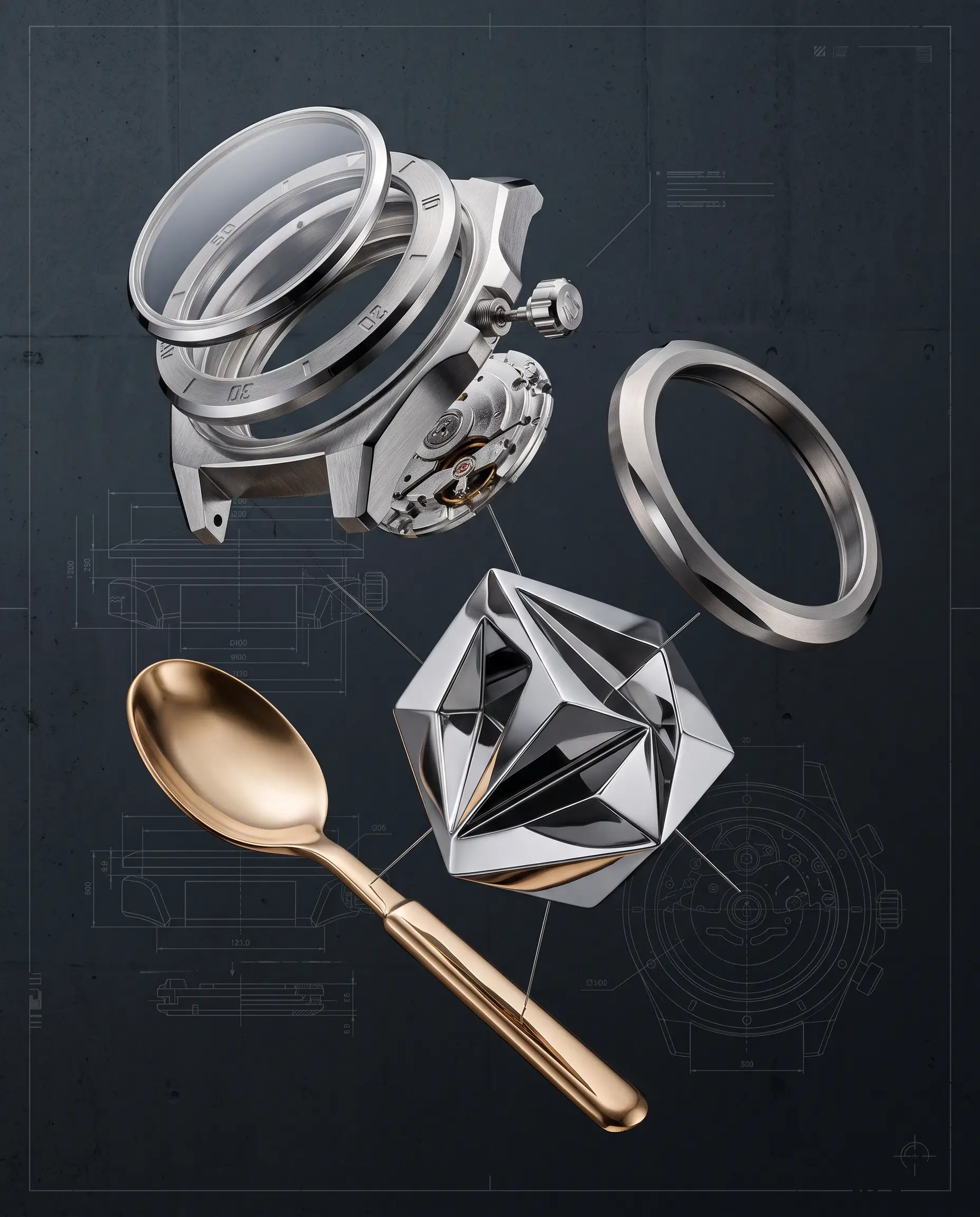
Component architecture: Sapphire crystal, ceramic bezel insert, casing ring, and multi-piece dial elements before cleanroom casing.
Phase 3: Production Bill of Materials (BOM) for 300 Units
The standard minimum order quantity (MOQ) for bespoke watch contract manufacturing is 300 to 500 units . Below is a detailed component cost breakdown for a 300-piece batch of a Tier 2 Automatic Diver (316L stainless steel, sapphire crystal, Miyota 9015 high-beat movement, 20 ATM water resistance):
| Component Specification | Material & Processing | Unit Cost (USD) | Total for 300 pcs |
|---|---|---|---|
| Automatic Movement | Miyota 9015 (28,800 vph, date, 42h power reserve) | $48.00 to $65.00 | $14,400 to $19,500 |
| Watch Case & Crown | 316L Marine Steel, brushed/polished, screw-down crown | $22.00 to $35.00 | $6,600 to $10,500 |
| Rotating Bezel Insert | Unidirectional 120-click, ceramic with Super-LumiNova | $8.00 to $14.00 | $2,400 to $4,200 |
| Front Crystal | Double-domed sapphire with multi-layer internal AR coating | $6.00 to $12.00 | $1,800 to $3,600 |
| Dial & Hand Set | Enamel or sunburst finish, applied faceted markers, BGW9 lume | $10.00 to $18.00 | $3,000 to $5,400 |
| Strap / Bracelet | Solid 316L link bracelet or custom molded FKM rubber | $9.00 to $24.00 | $2,700 to $7,200 |
| Cleanroom Assembly & QA | Class 10,000 casing, 5-position regulation, 20 ATM pressure test | $8.00 to $15.00 | $2,400 to $4,500 |
| Total Production BOM | 300 Fully Assembled Mechanical Watches | $111.00 to $183.00 | $33,300 to $54,900 |
Manufacturer Insight
Substituting a Seiko NH35 caliber reduces unit movement expense by approximately $20 to $30 compared to high-beat Japanese or Swiss calibers. Across a 300-piece production run, this single selection reduces cash requirements by $6,000 to $9,000, making it the most common movement choice for debut collections.
Phase 4: Presentation Packaging & Warranty Collateral ($2,500 to $6,000)
Packaging is the first physical interaction a collector has with your brand. Unboxing sets the perceived value threshold:
- Bespoke Watch Box or Travel Roll ($6.00 to $16.00 per unit): Textured magnetic rigid gift boxes, waxed canvas travel pouches, or impact-resistant dive cases ($1,800 to $4,800 for 300 units).
- Warranty Cards & Technical Manuals ($1.50 to $3.50 per unit): Metal or embossed warranty cards, serialized certificate tags, and microfiber cleaning cloths ($450 to $1,050).
- Heavy-Duty Shipping Cartons ($300 to $500): Custom foam packaging to prevent vibration damage during commercial air freight.
Phase 5: Air Freight, Import Tariffs & Cargo Insurance ($2,000 to $5,500)
Landed import costs must be factored into your unit economics before setting consumer retail pricing:
- Express Air Courier (DHL / FedEx): 300 boxed watches weigh between 120 and 180 kg ($1,200 to $2,500 depending on fuel and volumetric weight).
- Customs Duties and Import Tariffs: In the US market, watch import duties are calculated on separate components (movement, case, strap). Expect an effective tariff rate between 5% and 9% of commercial invoice value ($1,500 to $3,500). European imports are subject to applicable country VAT and customs tariffs.
- Cargo Transit Insurance: Typically 0.4% to 0.8% of declared commercial value ($150 to $300).
Phase 6: Brand Identity, Photography & Marketing ($5,000 to $20,000+)
Even the most meticulously machined mechanical watch will fail to convert without compelling imagery and targeted horological community visibility:
- Trademark Registration ($600 to $2,000): Registering your brand name with the USPTO and international intellectual property bodies protects against trademark disputes.
- Macro Photography & 3D Video Assets ($1,500 to $4,000): High-resolution wrist photography, movement macro shots, and video b-roll for Kickstarter campaigns or e-commerce storefronts.
- Independent Reviewer Samples ($1,500 to $3,500): Sponsoring sample watches and freight for horology blogs, YouTube reviewers, and watch journalists.
- Audience Acquisition & Pre-Launch Advertising ($2,000 to $10,000): Paid social acquisition and newsletter sponsorships to build an active pre-order waitlist prior to production launch.
3. Consolidated 300-Piece Startup Budget Matrix
Below is the complete capital requirement comparison based on real contract manufacturing expenditures:
| Capital Allocation Category | Lean / Entry Model | Professional Standard | Premium Execution |
|---|---|---|---|
| CAD, DFM & Functional Samples | $2,500 | $5,000 | $8,500 |
| Tooling & Mold Dies | $2,000 | $4,500 | $8,000 |
| Production BOM (300 Units) | $24,000 (NH35 / Miyota 8k) | $42,000 (Miyota 9015 / PT5000) | $75,000+ (Sellita SW200) |
| Packaging & Collateral | $2,000 | $3,500 | $6,000 |
| Air Courier, Duties & Insurance | $1,800 | $3,200 | $5,000 |
| Brand Identity, Media & Ads | $3,000 | $6,000 | $12,000 |
| Operational Buffer (10%) | $3,500 | $6,400 | $11,500 |
| Total Estimated Capital Outlay | $38,800 | $70,600 | $126,000+ |
4. Four Fatal Budgeting Mistakes to Avoid
Mistake 01: Over-Engineering Custom Tooling on Collection One
Designing completely custom bezels, custom hands, bespoke bracelets, and unique casebacks simultaneously inflates tooling past $10,000. Successful brands focus their unique design DNA on one or two elements (such as an iconic dial texture or case contour) while leveraging proven standard hand and strap dimensions.
Mistake 02: Forgetting Landed Freight, Tariffs & Duty Costs
Founders calculating profit margins solely on unit manufacturing costs often experience cash shortages upon customs clearance. Factor 8% to 15% on top of ex-factory invoices for air freight, customs broker fees, and import taxes.
Mistake 03: Insufficient Marketing Capital
Allocating 95% of available funds to production and leaving $1,000 for marketing results in 300 unsold watches sitting in storage. Reserve at least 15% to 20% of your total budget for photography, review samples, and community acquisition.
Mistake 04: Splitting Component Orders Across Fragmented Suppliers
Attempting to source cases from one vendor, dials from another, and movements from a third to save pennies creates dimensional discrepancies. When case tolerances do not match movement holder rings or dial foot spacings, assembly halts and repair costs quickly exceed initial savings.
5. Frequently Asked Questions
Can I start a watch brand with less than $10,000?
Starting with under $10,000 is only possible through white-label catalogue rebranding (putting your logo on an existing factory watch with 100-piece MOQ) or by using pre-order crowdfunding where initial funds cover only 3D CAD modeling, working prototypes, and promotional video assets. Fully bespoke mechanical manufacturing requires greater initial liquidity.
What is the typical minimum order quantity (MOQ) for custom watches?
For bespoke case architecture, custom dials, and unique hands, the standard minimum order quantity across reputable horological manufacturers is 300 to 500 pieces per model, often split across two or three dial colorways (e.g. 150 black dials, 150 blue dials).
Which movement is most cost-effective for a first collection?
The Seiko NH35/NH38 family represents the most cost-effective mechanical entry point, offering high reliability, bi-directional winding, and universal serviceability under $35 per unit. For high-beat 28,800 vph performance and slim case proportions, the Miyota 9015/9039 series ($50 to $65) is the enthusiast favorite.
What gross margin should an independent microbrand target?
Direct-to-consumer microbrands should target a landed manufacturing cost of 20% to 28% of their target retail price (MSRP). This represents an approximate 3.5x to 5x markup, leaving sufficient gross margin for digital marketing acquisition, payment processing fees, customer service warranty reserves, and collection reinvestment.
DIRECT OEM CONTRACT MANUFACTURING
Request a Precision Manufacturing Estimate
Fullion coordinates end-to-end horological engineering: multi-axis CNC machining, custom dials, movement sourcing, cleanroom casing, and multi-atmosphere pressure testing under one unified roof.